 voella
Updated 13 November 2026
How to speak louder without yelling
If people often ask you to repeat yourself, the fix is rarely to push harder. A voice that carries comes from breath, an open mouth and a clear aim, not from a tight throat.

Why yelling doesn’t work
When you try to get louder by squeezing, the muscles around your throat tighten. Your voice gets harsher instead of clearer, it tires quickly, and it can sound angry, which is the last thing a soft-spoken person wants. The NIH’s voice institute notes that talking too loudly and too softly can both stress your voice, and that a voice should be supported by breath rather than by the throat alone.
The good news is that a louder everyday voice is mostly technique and habit. These seven steps make the biggest difference. If you’re quiet by nature, how to stop being so soft-spoken covers the everyday side: meetings, groups and counters.

1. Breathe low before you speak
Put a hand on your belly and breathe in through your nose. Let your belly move out instead of your shoulders moving up, then speak on the way out. This is what people mean by speaking “from the diaphragm”: a full, low breath that gives your voice steady air to work with.
If you run out of air early, take a fuller breath, not a faster one.
Count from one to ten on one breath, 3 times
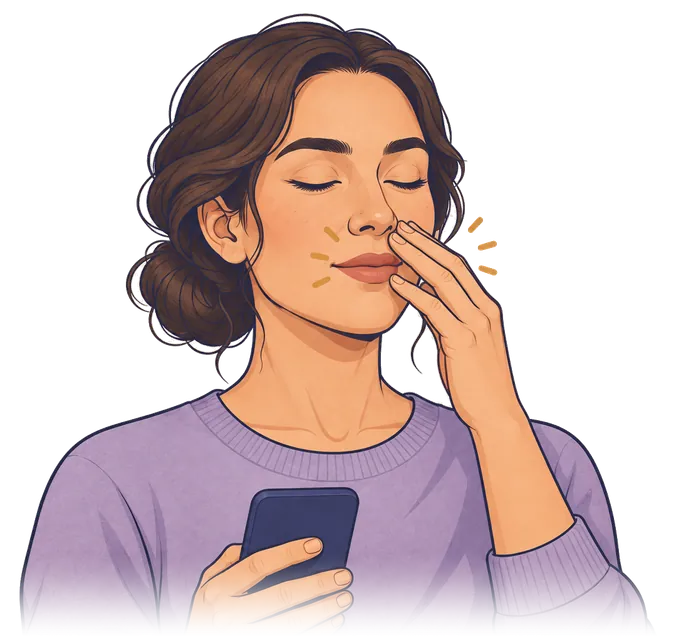
2. Find the buzz with a hum
Hum “mmm” as if you were agreeing with someone. You should feel a light buzz on your lips and around your nose. That buzz is resonance, and it helps your voice carry without extra force. Then open the hum into words and keep the buzz as each word opens.
Mmm-one, mmm-two, mmm-three.
30 seconds of humming, then the line

3. Open your mouth wider
Quiet speakers often talk through a nearly closed mouth. Let your jaw drop further than feels normal, especially on vowels. More space in the mouth lets more sound out, with no extra effort from your throat.
A long “ah” for 5 seconds, 3 times
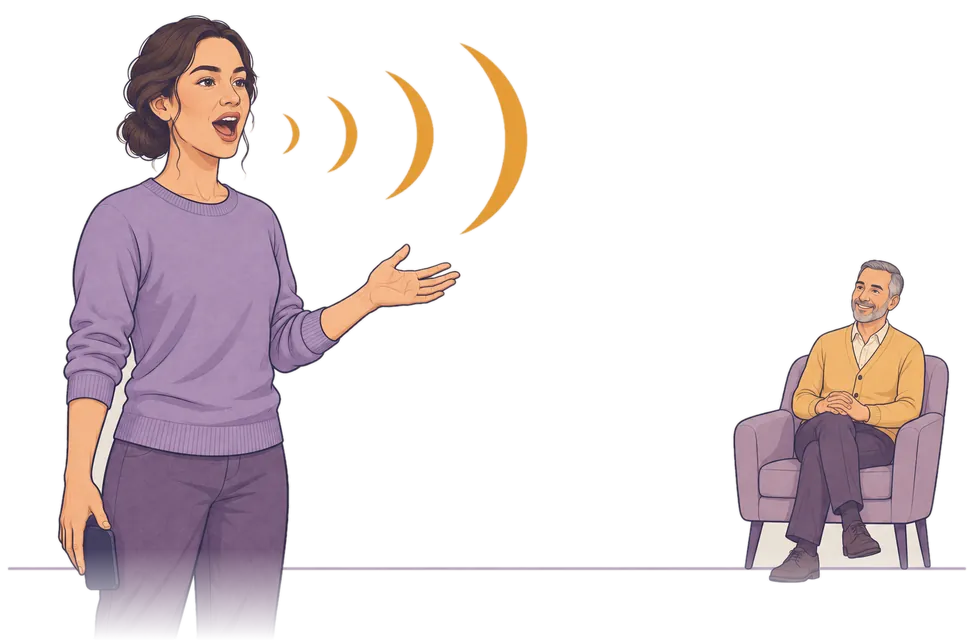
4. Aim at someone across the room
Pick a point a few meters away, like the far wall or a door, and say a short sentence as if you were handing it to someone standing there. Most people get louder and clearer without pushing. Actors and teachers use the same trick: think about where your voice needs to land, not about volume.
Could you pass me that book?
5 short sentences to the far wall
5. Land the last word
Many quiet voices start a sentence well and fade by the end, so the most important word gets lost. Keep enough air for the end of the sentence and say the last word as clearly as the first.
Can we move the meeting to Thursday?
3 times, with “Thursday” as clear as “Can”
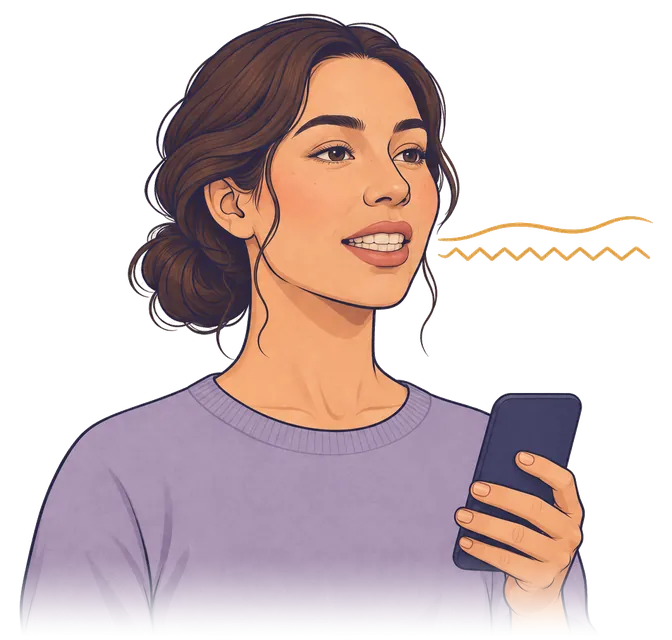
6. Slow down and say the consonants
Clear speech sounds louder than fast speech at the same volume. Slow down and finish your consonants, especially t, d, k and s at the ends of words. Listeners need those sounds to understand you.
1 minute of reading aloud, slower than usual
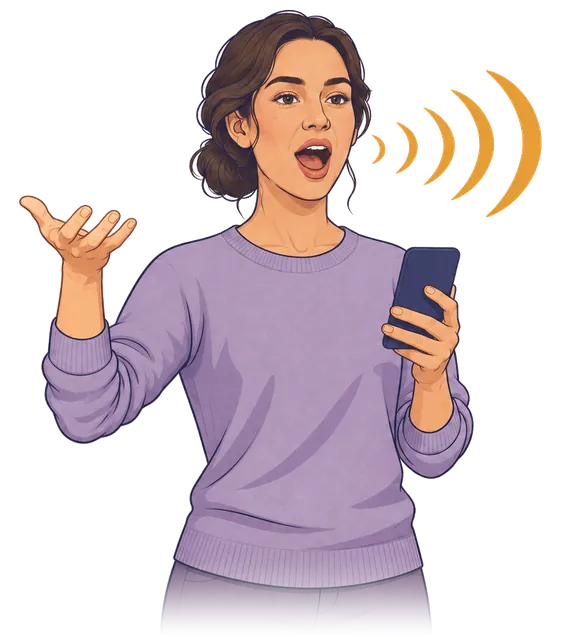
7. Practice soft to loud
Count from one to five, starting quietly and getting louder on each number. Keep your neck and shoulders loose. If your throat tightens, go back to the last comfortable number. This teaches you to add volume with breath instead of strain.
3 rounds, one to five
A five-minute daily routine
- 1 min Low breathing on a quiet “sss”
- 1 min Humming and lip trills
- 1 min Soft to loud counting
- 2 min Reading aloud to a point across the room
Do it every day for a few weeks. Short and regular beats long and occasional.
Signs you’re pushing too hard
- Your neck or jaw feels tight.
- Your throat feels scratchy or raw after a short time.
- Your voice cracks or turns breathy as you get louder.
If you notice any of these, rest, drink some water and go back to a gentler volume.
When to see a doctor
This guide is practice, not medical advice. The NIH advises seeing a doctor if you have been hoarse for more than three weeks, have pain when speaking or swallowing, or lose your voice for more than a few days. A voice that has grown quieter over time for no clear reason is worth checking too.