 voella
Updated 17 November 2026
Voice projection exercises you can do at home
Projection is a voice that carries across a room without sounding forced. It is a skill, and like any skill it grows with short, regular practice.

What projection really is
Projection is not the same as volume. A projected voice is supported by steady breath, resonates in the mouth and face, and is aimed at the listener. Shouting skips those steps and makes the throat do the work. The exercises below train each part, from breath to aim.
Before you start
- Stand or sit tall with loose shoulders.
- Keep some water nearby.
- Five to ten minutes is plenty. Stop if anything hurts.
Eight exercises, from breath to aim

1. Belly breathing
With a hand on your belly, breathe in through your nose so your belly moves out, then breathe out slowly through gently pursed lips. This is the base of every other exercise: steady air makes a steady voice.
5 slow breaths
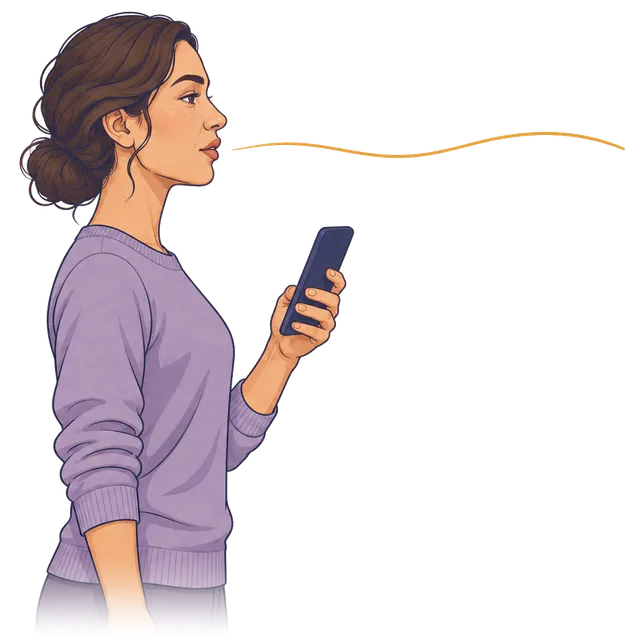
2. Steady hiss
Breathe in low, then let the air out on a long, even “sss”, like a slow leak from a tire. Keep the sound the same from start to finish. You are training your breath to last and to stay steady, which is exactly what a long sentence needs.
3 long hisses

3. Humming
Hum on a comfortable note with your lips closed and your teeth slightly apart. Feel for a buzz on your lips and nose, then slide the hum gently up and down. Humming warms up the voice and finds the resonance that helps it carry.
30 seconds

4. Lip trills
Blow air through loosely closed lips so they flutter, like a child imitating a motorboat, then add your voice. If your lips won’t flutter, press lightly on your cheeks with your fingers. Voice teachers and speech therapists use trills a lot because they balance air and voice while staying easy on the throat.
3 trills, 5 seconds each

5. Long “ah”
Take a low breath and say a long “ah” at a comfortable pitch, with a relaxed jaw and an open mouth. Aim for a clear, steady tone rather than a loud one.
3 times, 5 seconds each

6. Count loud
Count from one to ten, one breath per number, each number stronger than the last. Keep the effort in your breath and belly, not in your neck.
One to ten, once

7. Soft to loud
Say a short phrase five times, starting quietly and growing to a confident, room-filling voice, then come back down. Smooth changes show control, not just force.
Good morning, everyone.
5 times up, then back down
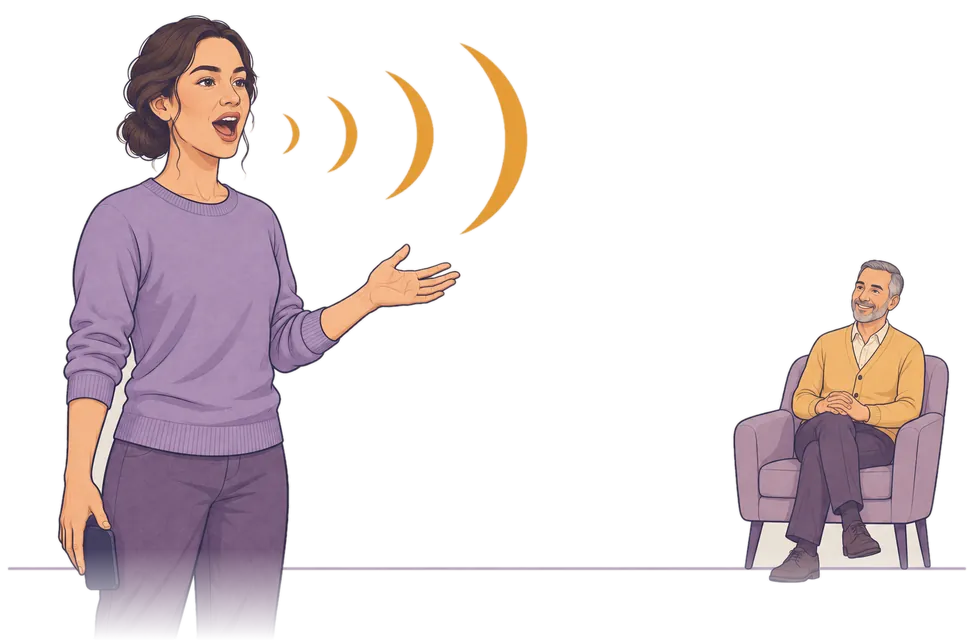
8. Across the room
Stand at one end of a room and say a sentence to a point at the other end. Then try it down a hallway or across a yard. Notice how your mouth opens and your breath deepens on their own once you have a target.
Excuse me, is this seat taken?
5 sentences, each to a farther point
For teachers and presenters
- Use a microphone when there is one, especially in large rooms. The NIH suggests one for classrooms and similar spaces.
- Take short voice breaks during the day.
- Don’t talk over noise. Wait, move closer or use a signal.
- Drink water regularly.
How long until you hear a difference
Many people find projecting easier within the first few days, mostly because they stop squeezing. Making it your everyday voice takes longer: a few weeks of daily practice. Record yourself at the start and once a week, and compare. Hearing the change is the best motivation there is. If you’re quiet in everyday life too, pair these with how to stop being so soft-spoken.
A note on safety
Projection should never hurt. If you have been hoarse for more than three weeks, have pain when speaking, or have a known voice condition, see a doctor or a speech-language pathologist before you practice.